The Best Things to See in Madrid: A Local's Guide
Ask ten different people what you “must see” in Madrid and you'll get ten overlapping lists, most of them written by someone who spent three days here on a work trip. Here's a version from someone who's actually lived in the city for over a decade. It covers the landmarks worth your time and points you toward a few things most guidebooks skip entirely.
The historic centre
Start where the city itself started, more or less. Plaza Mayor is the obvious anchor, laid out in 1619 under Philip III, whose statue still sits at its centre. It's been a market square, a bullring, and a place of public executions, so there's more history under your feet than the postcard shot suggests. From there, it's a two-minute walk to Plaza de la Villa, one of the oldest surviving squares in the city and one most visitors miss entirely because it isn't on the direct route between the bigger sights.
The Royal Palace is worth seeing from the outside even if you don't go in, and the square in front of it, Plaza de Oriente, is one of the most underrated spots in the whole city. Twenty statues of Spanish monarchs line its gardens, part of a set of over a hundred originally meant for the Palace roofline. They never made it up there, the story involves a queen's nightmare about an earthquake, which is a better anecdote than most plaques in Madrid give you.
Retiro Park
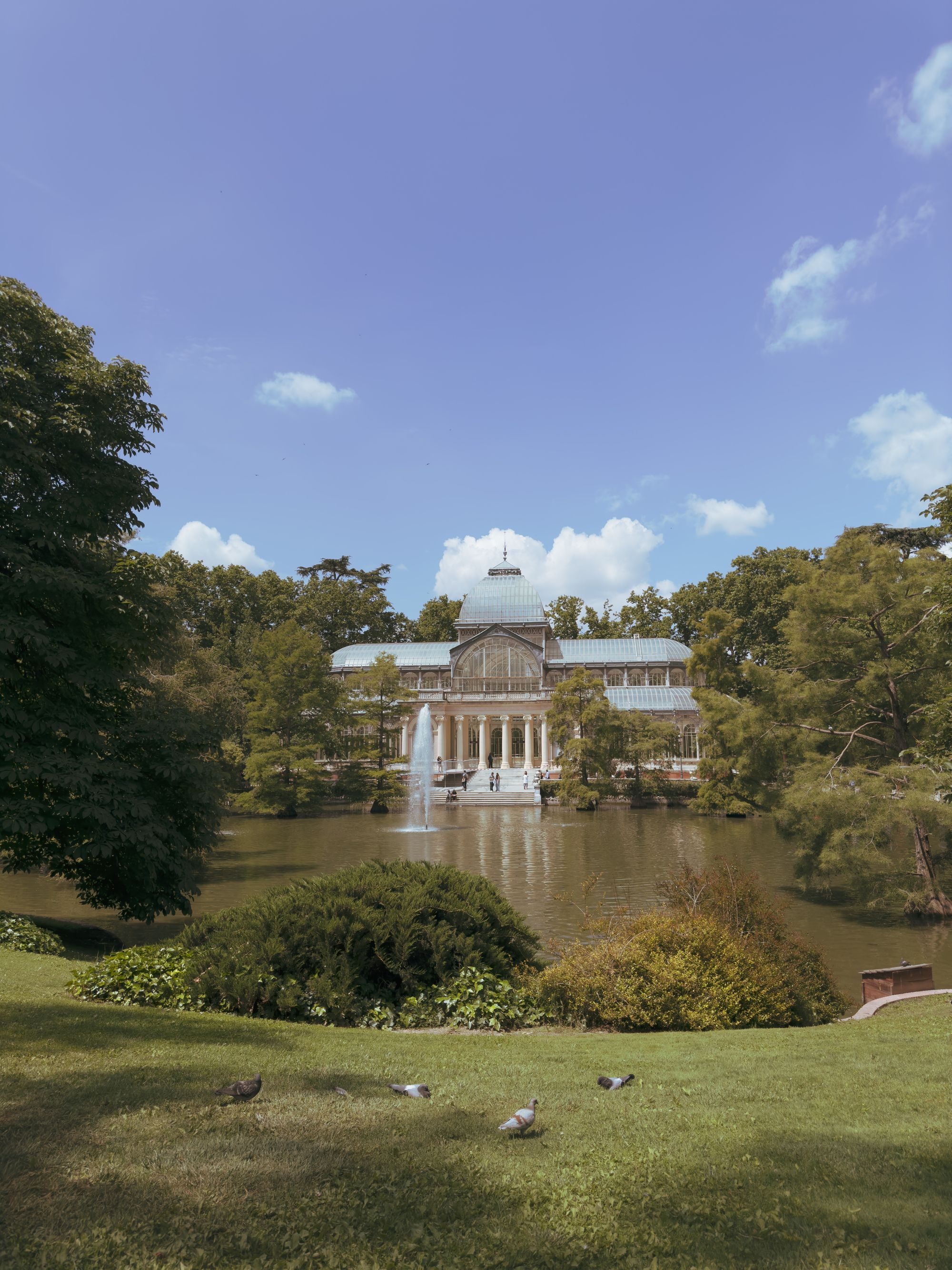
Once the private gardens of the Buen Retiro Palace, built for Philip IV in the 1630s, Retiro didn't open to the public until 1868. Today it's 125 hectares of the city's best green space, the Estanque lake, the rose garden, and the Palacio de Cristal, a glass-and-iron pavilion built in 1887 that started life as an exhibition hall for plants brought back from the Philippines. On a Sunday, half the city is here, which is exactly the point.
The art triangle
Madrid's three big museums, the Prado, the Reina Sofía, and the Thyssen-Bornemisza, sit within easy walking distance of each other along the Paseo del Prado, hence the “Golden Triangle of Art” nickname. The Prado alone, founded in 1819, holds one of the finest collections of European painting anywhere, Velázquez and Goya especially. You don't need a full day at each, even a couple of hours at the Prado covers the essentials.
Barrio de las Letras
This is the old literary quarter, home in the 17th century to Cervantes, Lope de Vega, and a handful of Spain's other Golden Age writers, several of whom lived a few doors from each other and got along about as well as you'd expect from rival writers sharing a neighbourhood. Calle Huertas has their quotes inlaid into the pavement, and Plaza de Santa Ana makes a good spot to sit and take it in.
Food and markets
Mercado de San Miguel, a striking 1916 wrought-iron and glass building near Plaza Mayor, is the most photographed food market in the city and a good introduction to Spanish market culture even if it's more geared toward visitors than locals these days. For a more local feel, head into La Latina and wander Cava Baja, one of Madrid's oldest tavern streets, still lined with places serving the kind of food this city actually built its reputation on.
A few practical notes
Madrid is a genuinely walkable city, the centre is compact enough that most of the above fits into a single day if you're moving with purpose, or a relaxed two or three if you're not. Summers are hot enough that mornings are the better time for walking, and most museums are closed on Mondays, worth checking before you plan around one.
If you'd rather see the parts of this list that don't make it onto a map, with someone who can actually tell you why they matter, that's exactly what our Crown to Constitution tour is built for.